I Love Vienna
Falling asleep in an express train while returning to Kolkata after a trip outside of West Bengal, listening to that “jhak jhak'' sound of the wheels on track was like my mother swaying me to sleep in her arms after playing all day.
Recently, the New York State University in the US initiated a programme called ‘NYU in real life’, to promote a student-led culture change of spending less time online and more in living life in person, and creating together a ‘collective effervescence’.




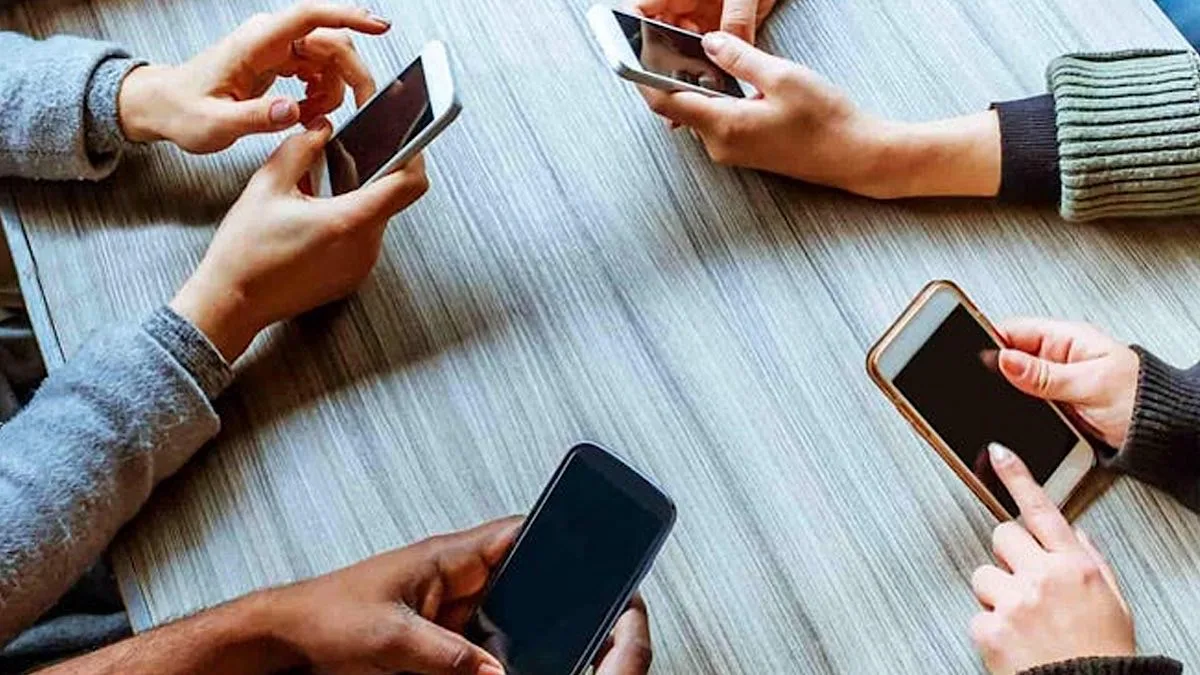
Photo:SNS
Recently, the New York State University in the US initiated a programme called ‘NYU in real life’, to promote a student-led culture change of spending less time online and more in living life in person, and creating together a ‘collective effervescence’. Many others followed suit like the Yale University with its ‘Offline Oasis’, where students in a place full of sunlight and plants, hang out without screens.
The University of Alabama offers ‘Tech Free Thursdays’ at its students’ center, and the University of California at Berkeley opened a class on limiting technology use, which became very popular in no time. New global data from the Financial Times and GWI – collected from more than fifty countries – revealed that the social media usage that peaked in 2022, is now on a steady decline. The gradual retreat is led by teens and 20+ youths with a 10 per cent cut back. FT pointed out that the withering away of ‘real-person social content’, and a deluge of AI-generated ‘slop’ feeds were the accelerants. The downward curve is more pronounced in Europe and other developed markets.
Advertisement
While North America stands out as the major exception with the U.S. and Canada continuing to have a climb of about 15 per cent higher consumption than Europe. However, there is a parallel behavioural wave of ‘digital minimalism’ that is taking hold on American campuses. In a recent Pew Research Center survey, about half of teens (48 per cent) spoke about how social media mostly casts negative effects on people of their age, and a significant margin of young adults (44 per cent) are now consciously reducing social media and smartphone usage. A 2024 report from the US National Center for Health Statistics, disclosed that about 41.6 per cent of college students have described anxiety as a top concern, and many of them feel that social media feeds evoke ‘unrealistic expectations’.
Advertisement
A global 2025 Deloitte consumer trends survey showed that almost a quarter of respondents who deleted social apps reported increasing pressures of being online as well as damage to their mental health as causes. A nationally representative survey (More in Common) in the UK in 2025 found that 62 per cent of young people (ages 16 to 24) believe social media does more harm than good for those under 16, rising to 66 per cent among Gen Z women. Australian survey data showed similar patterns, with young people identifying social media as a leading contributor to declining youth mental health.
Now, according to the 2026 UNICEF update, two-thirds (66 per cent) of 30,000 children polled globally expressed fear about cyberbullying, and a survey of about 2,80,000 young people (11-15 years) across 44 countries and regions in Europe, central Asia and Canada found that 12 per cent of adolescents are at risk of problematic gaming. In India, where social media adoption is reportedly at its peak with average usage growing by 5.23 per cent from 2024 to early 2026, a 2024 study of college students in Tamil Nadu found that over 26 per cent of adolescents engaged in excessive social media use, and showed symptoms of anxiety and low self-esteem.
The Annual Status of Education Report(GOI), 2024, revealed that only 57 per cent of children aged 14 to 16 use phones for education, and a staggering 76 per cent for social media. Youth aged 15 to 24 were identified as most vulnerable to addiction and gaming disorders. A series of teen suicides across the country has been linked to online gaming addiction, task-based viral apps, and mounting digital debt. Dr. Anne Marie Albano, director, Columbia University Clinic For Anxiety and Related Disorders, has explained that social media tends to promote a ‘counterfeit reality’ for students who are unable to cope with their circumstances.
A study using the Interaction of Person-AffectCognition-Execution (I-PACE) model, appraised that high-frequency social media use among college students undermines academic performance through an emotional pathway whereby social anxiety leads to increased fear of missing out or FOMO. It further said that a strong teacher-student relationship can function as an emotional regulatory mechanism. Research also suggests that healthy relationships with digital tools help in improving focused attention, mental well-being, and academic performance. When NYU professor Jonathan Haidt’s research and landmark book ‘The Anxious Generation’ drew the world’s attention to the mental health crises among the youth, many governments acted.
They limited or banned access to social media for adolescents and teens. Australia was the first country to impose a full-fledged ban for users under 16, which was followed by countries like France (under 15) and Malaysia (under 16). Many others are finalising similar bans. More than 10 countries such as the UK, Denmark, and Norway are mulling over strict age-verification laws. India’s Digital Personal Data Protection (D PDP) Act, 2023, mandates ‘verifiable parental consent’ for data processing for anyone under 18, but does not regulate the ‘addictive architecture’ of digital platforms.
While the world passes through an intense wave of digitised socialisation, many contend that legally imposed bans and restrictions cannot entirely address the emotional challenges faced by the youth. A group of social scientists maintains that parent-child relationships should be at the centre-stage of managing the use and value of social media, and should help create a safe and supportive physical environment in fostering healthy digital habits. The solution, surely, lies in a comprehensive and multi-stakeholder approach with governments and policymakers building a safety net to regulate tech companies, parents and caregivers, and providing the foundational resilience to youth and adolescents to navigate these platforms safely.
(The writer is former Director-General, Doordarshan & AIR, and former Press Secretary to the President.)
Advertisement